
EN / FR

WE TEST. WE DON’T SELL THE FIX
How healthy is the air in your home?
Most indoor air-quality problems are invisible. AirWiz helps you understand what may be happening inside your home through professional indoor air-quality measurements, moisture investigation, thermal imaging, ventilation assessment and targeted sampling when appropriate.


Independent & Unbiased
We provide objective data without any sales pitch or hidden agenda.
Independent information you can actually use.

Answers, not sales pitches.
Clear findings explained in plain language for homeowners.

Your Home, Your Family
Our priority is your indoor environment and the health of your family.
Do you notice any of these conditions?

Excessive dust
Visible particles that can trigger allergies and respiratory irritation.

Musty odours
Unusual smells that may indicate hidden moisture or biological growth.

Condensation
Water droplets on windows that can lead to mold and structural damage.

High humidity
Moist air that can create a breeding ground for mold and mildew.

Poor ventilation
Allows CO₂ and other indoor pollutants to accumulate

Water damage
History of leaks or flooding that may have left behind hidden moisture.
A clearer picture of your indoor environment
We provide independent, evidence-based assessments to help you understand the invisible factors affecting your home's air quality.

Indoor Air Quality Assessment
Measure and document important environmental conditions to help homeowners understand what those measurements may indicate.

Ventilation Assessment
Evaluate CO₂ and other indoor conditions to better understand how effectively occupied areas are being ventilated.
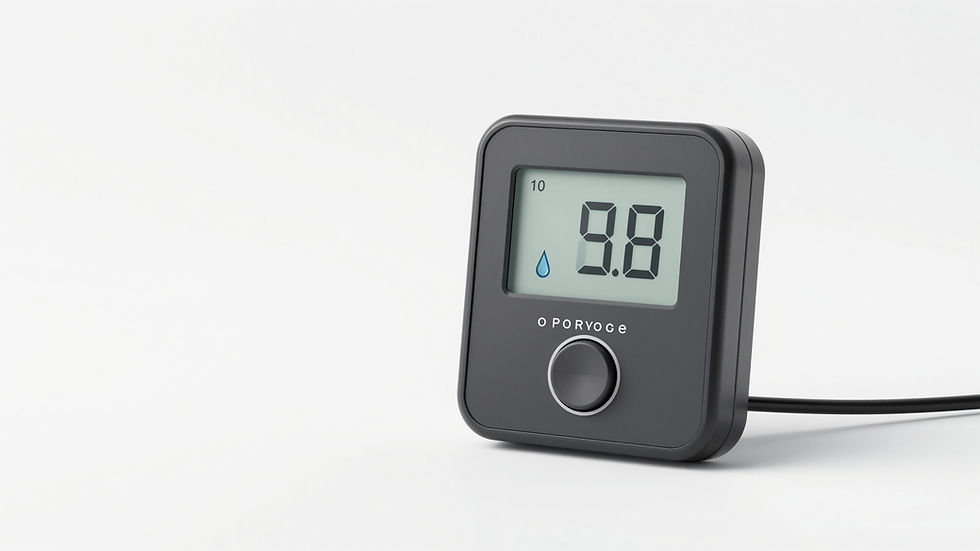
Moisture Investigation
Use professional moisture-measuring equipment to check suspicious walls, ceilings and building materials for elevated moisture.

Thermal Imaging
Use thermal imaging to identify temperature patterns and anomalies that may help locate areas requiring additional moisture investigation.

Mold Investigation
Evaluate visible conditions, moisture patterns, previous water damage and other factors associated with potential mold concerns.

Professional Air Sampling
A measured air sample is collected using professional sampling equipment. The sample is carefully sealed and submitted to an independent laboratory for analysis.
From questions to clear answers
We start with your concerns, the building history and any known moisture, ventilation or air-quality issues.
1
Tell us what you’re noticing
We start with your concerns, the building history and any known moisture, ventilation or air-quality issues.
2
We assess your home
AirWiz performs targeted measurements and investigates areas of concern using appropriate professional equipment.
3
Additional sampling when appropriate
If further testing is justified, air or surface samples may be collected and submitted for independent laboratory analysis.
4
You receive clear findings
Your report explains the measurements, observations and practical next steps in plain language.
Your Air Health Score
Excellent
Good
Needs Attention
Action Recommended
We don’t just hand you numbers. AirWiz organizes the important findings into a clear, easy-to-understand overview so you can quickly see which areas appear satisfactory and which deserve attention. Clear results. Practical next steps. You stay in control.
Why homeowners choose AirWiz
Independent
Our assessment is not tied to selling remediation or cleaning services. We provide unbiased, evidence-based testing to help you understand your home's environment.
Easy to Understand
We explain what the measurements mean without overwhelming you with technical jargon. Our reports are designed for homeowners, not scientists.
Professional Equipment
We use purpose-selected instruments for indoor air, moisture and thermal investigation. Our tools provide the data needed for accurate assessments.
Practical Recommendations
You receive information that helps you decide what should happen next. We provide clear findings and actionable steps to improve your indoor air quality.
Professional Equipment
Particle Monitoring
Measures airborne particle levels but cannot identify specific allergens or individual particle types.
CO₂ Monitoring
Evaluates ventilation conditions but does not measure every indoor pollutant or chemical compound.
Thermal Imaging
Identifies temperature patterns and anomalies that may warrant further moisture or building envelope investigation.
Moisture Investigation
Confirms moisture conditions in materials but does not identify the root cause of the problem.
A report designed for homeowners
Your findings should be presented clearly enough that you can understand them and discuss them with a contractor, property manager, or other professional if additional work is required.
Property Information
Complete details about the property, including address and building history.
Areas Evaluated
A detailed map of the spaces we investigated, from living rooms to basements.
Measurements
Scientific data on CO₂, PM2.5, PM10, temperature, and relative humidity.
Photos & Thermal Images
Visual documentation of moisture patterns and thermal anomalies.
Summary of Concerns
Plain-language explanations of what the data indicates about your home.
Recommended Next Steps
Practical advice on how to improve your indoor air quality and ventilation.

Common Questions
Independent answers to your indoor air quality concerns.
What does an indoor air-quality assessment tell me?
The assessment combines observations and measurements to better understand indoor environmental conditions and identify areas that may warrant attention.
Can you tell me if my home has mold?
Visible conditions, moisture investigation and targeted sampling may help investigate mold concerns. Laboratory testing may be required for identification.
Can your equipment detect allergens?
Normal particle monitoring cannot identify specific allergens. Specialized laboratory testing is required when allergen identification is needed.
What is PM2.5 and PM10?
These are categories of airborne particulate matter based on particle size. PM2.5 refers to particles 2.5 micrometers or smaller, while PM10 refers to particles 10 micrometers or smaller.
Why measure CO₂?
Indoor CO₂ is commonly used as one indicator of ventilation conditions in occupied spaces. High levels can indicate poor air circulation.
Does thermal imaging detect mold?
No. Thermal imaging shows temperature differences that can help direct further investigation. It does not see mold or moisture directly.
Do you sell mold remediation or duct cleaning?
No. AirWiz focuses on independent assessment and testing. We do not make our recommendations based on selling remediation or cleaning services.
Will I receive a report?
Yes. The customer receives an easy-to-understand report explaining important findings and recommended next steps.
Service Areas
Laval
North Shore
Greater Montreal
Clear answers about the air inside your home.
AirWiz Solutions was created around a simple idea: homeowners deserve independent information before spending money trying to solve an indoor air-quality problem. Our role is to assess, measure, investigate and explain. We want every customer to leave the process understanding their home better and knowing what their next step should be.